
I had to take advantage of the tomatoes that were still at the farmer’s market this chilly weekend. Also, I picked up some eggs from Grazin’ Angus Acres stand. They are a farm in Ghent, NY, and their eggs have the “Animal Welfare Approved” sticker. Not only are the chickens a lot happier than your typical chickens, but the eggs really are delicious as well.
I didn’t have any curry powder on hand, so I mixed the following spices to make my own version of pseudo-curry powder: red pepper flakes, turmeric, yellow mustard seed, brown mustard seed, coriander, hungarian paprika, cumin, and cloves.
Also, I used the egg-poaching advice from Smitten Kitchen and it worked out well.
Thanks to Cooking Light for this recipe!
Ingredients:
- 1 cup dried small red lentils
- 3 cups water
- 1 bay leaf
- 2 teaspoons olive oil
- 1 cup chopped onion
- 1 cup chopped tomato
- 1 teaspoon curry powder
- 1/4 teaspoon ground cumin
- 1/2 teaspoon salt, divided
- 1/8 teaspoon ground red pepper
- 1 garlic clove, minced
- 1 tablespoon white vinegar
- 4 large eggs
- 1/4 teaspoon freshly ground black pepper
- 1/4 cup plain low-fat Greek yogurt
- 2 tablespoons chopped fresh cilantro
Directions:
- Combine first 3 ingredients in a large saucepan. Bring to a boil. Cover, reduce heat, and simmer 20 minutes or until lentils are tender. Drain; discard bay leaf.
- Heat a nonstick skillet over medium-high heat. Add oil to pan; swirl to coat. Add onion and tomato; sauté 8 minutes or until onion is tender. Add curry, cumin, 1/4 teaspoon salt, red pepper, and garlic; sauté 2 minutes. Add lentils; cook 1 minute. Remove from heat.
- Add water to a large skillet, filling two-thirds full; bring to a boil. Reduce heat; simmer. Add vinegar to pan. Break eggs into custard cups. Gently pour eggs into pan; cook 3 minutes or until desired degree of doneness. Carefully remove eggs from pan using a slotted spoon. Place about 3/4 cup lentil mixture on each of 4 plates; top each serving with 1 poached egg. Sprinkle evenly with remaining 1/4 teaspoon salt and black pepper. Top each serving with 1 tablespoon yogurt and 1 1/2 teaspoons cilantro.

This recipe came from Cooking Light magazine. It’s a perfect addition to a fall meal. It brightens up the plate and has a great flavor.
All of the herbs came from my garden. However, the cilantro was special. A few months ago in the heat of summer, I was frustrated that my cilantro kept bolting. I decided to let it flower and turn to seed so I could make my very own coriander seed. Once the plants got to the right point (for us, the right point was when we were sick of the constant swarm of bees who adored our cilantro flowers), I cut and then dried the plants in a paper bag. Then, I hung the bag inside for a few weeks. After a few weeks, I gave the bag a few shakes. Amazingly, there were some coriander seeds at the bottom of my bag. However, the yield was less than I hoped for: just a few tablespoons. I think I should have waited a bit longer to chop down the flowering cilantro before letting it dry.
Rather than save the coriander, I continued on with my experiment. I planted the coriander a few inches deep in the empty pot that used to house the cilantro. A few week later….little baby cilantro plants started popping up. I watered them gently at first. A few weeks later than that…carrot salad with a hit of heat features my very own “circle of life” cilantro. I know this is basic stuff to some people, but I was amazed that this process actually works.
Ingredients:
- 3 tablespoons extra-virgin olive oil
- 1 tablespoon fresh lemon juice
- 1 teaspoon sambal oelek (ground fresh chile paste)
- 4 cups coarsely grated carrot (about 1 pound)
- 3/8 teaspoon kosher salt
- 2 tablespoons chopped fresh cilantro
- 1 tablespoon minced fresh mint
- 1 tablespoon minced fresh chives (optional)
Directions:
- Combine first 3 ingredients in a large bowl, stirring with a whisk. Add carrot and salt; toss to coat. Let stand 30 minutes. Just before serving, add cilantro, mint, and chives, if desired; toss to combine.

Cue the old school Zelda theme song, because I’m on a quest: make a canning salsa that is spicy enough for my husband to enjoy the heat all winter long. This recipe came from the Food Channel. The result is a salsa with a decent amount of spice (but my quest is not over yet). I know that I can just add some habaneros for some serious heat, and that would be great for a salsa to stick in the fridge and eat within the week. However, whenever I want to put tomatoes in the cabinet for a year, I am wary of playing with the ingredients. That’s because I know that it has to have the correct level of acidity, etc. in order to avoid spoiling the food. Does anyone out there know of a tested recipe for a spicy canning tomato salsa? I think there are a still a few weeks left of tomato season, and I would like to give it one more try.
That being said, this salsa is fairly easy and pretty delicious. Adjust the number of jalapeños, or take out some seeds if that’s your preference. This recipe could also use a bit more salt, but I would taste it first and decide what you want to do. These tomatoes came from a farm stand in Amagansett, and the jalapeños came from the rooftop garden.
One more note: My makeshift canner holds 4 pint jars at a time. I only processed 4 jars and put the other two directly in the fridge. Then when I noticed how the salsa wasn’t salty, I started to doubt that it would stay good in the cabinet. The next day, I noticed some air bubbles in a few of the jars, so I decided put three more in the fridge. I didn’t want to take any chances. I only have one jar left in the cabinet. I will open that one in a few months and let you know if it worked.
For more information about canning, you can check out my other experiments:
Peach Salsa (this one has details about how to can)
Ingredients:
- 6 pounds of tomatoes
- 10 jalapeños, chopped (seeds included)
- 1/3 cup chopped fresh cilantro
- 9 cloves of garlic, chopped
- 1/3 cup lime juice
- 1 1/2 teaspoon salt
- 1 1/2 teaspoon cumin
- 3 onions (preferably 1 white, 1 yellow, 1 red)
- 6 pint jars (either small mouth or wide mouth is fine)
- Lids and rings
- Water bath with rack
- Sterilize jars and seals. (I did this by putting them in my dishwasher which gets super hot. Some dishwashers have a sterilize cycle, and that would work, too.)
- Start heating up your water for your water bath, if canning
- Put clean tomatoes in boiling water for 30-45 seconds, and then plunge them into ice water. The tomatoes will be easy to peel as a result.
- Peel tomatoes and cut out cores or bad spots. Chop the tomatoes to desired size (they will cook down so leave them slightly larger than you want them to be in the salsa).
- Mix tomatoes, garlic, lime juice, salt, and cumin and bring to a boil.
- Add onion, peppers, and cilantro. Bring to a boil and then simmer for 7-10 minutes.
- Remove 1 cup of liquid (to thicken the salsa).
- Put salsa in sterilized jars leaving 1/2 inch of headroom. (Stop here and put lids on if you are not canning)
- I did not do this, but I will next time: Use a chopstick or knife to slide around the jar to get rid of air bubbles.
- Wipe the rim of the jar, place sterilized seal on jar, and tighten the ring.
- Place jars in water bath for 15 minutes (time depends on altitude – more time for higher altitudes).
- Remove jars and let stand for at least 24 hours. Remove rings (optional) and store. If the jar did not seal, place it in refrigerator and use within a week.

Guest blogger day! My mom sent me this beautiful and tasty-looking recipe. One thing that I like about this recipe is that it doesn’t include a ton dried spices, so you won’t find yourself running to 12 different stores trying to find 1 teaspoon of some random spice that you will never use agin. She said that this recipe filled a quart sized mason jar perfectly.
Ingredients:
- 3/4 Cup apple cider vinegar
- 3/4 cup water
- 4 teaspoons coarse kosher salt
- 2 teaspoons sugar
- 1 3X1/2″ strip lemon peel (NO WHITE, just yellow)
- 12 oz little tomatoes (any kind) (I mixed!)
- 1/4 Cup coarsely chopped fresh dill
- 2 cloves garlic, thinly sliced (I used 4)
- 1/4 teaspoon dried crushed red pepper
Directions:
- Pour vinegar and water into saucepan. Add salt, sugar and lemon peel. bring to boil, stirring to dissolve sugar and salt. Remove from heat. Let cool 20 minutes.
- Pierce each tomato 2 times with slender wooden skewer or toothpick. (I did 2 pierces, making 4 holes, and I cut the bigger ones in half)
- Toss tomatoes with dill, garlic, and crushed red pepper in large bowl.
- Add cooled vineger mixture.
- Let stand at room temp at least 2 and up to 8 hours.
These can stay in fridge about 2 weeks.

The roof is exploding with spicy peppers. My tomatoes are not doing as well, so I have only been able to make small batches of salsa. What to do with excess jalapeños? Poppers! Thanks to my friend BC for introducing me to the site Skinnytaste, where I got this recipe. Skinnytaste has a variety of light recipes, beautiful step-by-step pictures, and clear directions. Of course, I have this bad habit of taking a low fat recipe and adding some more fat into it. However, the only real difference between her recipe and mine is that I used regular rather than light cream cheese. These poppers would make a great appetizer for a party because you can prepare them in advance.
Ingredients:
- 12 jalapeño peppers, sliced in half lengthwise
- 4.5 oz cream cheese
- 5 medium scallions, green part only, sliced
- 2 oz shredded low fat sharp cheddar (I used Cabot 50%)
- 1/2 cup egg beaters or egg whites, beaten (I used 4 egg whites)
- 3/4 cup panko
crumbs
- 1/8 tsp paprika
- 1/8 tsp garlic powder
- 1/8 tsp chili powder
- salt and fresh pepper
- spray oil
Directions:
- Preheat oven to 350°. Wearing rubber gloves, cut peppers in half lengthwise and scoop out the seeds and membrane.
- Combine cream cheese, cheddar and scallions in a medium bowl.
- Combine panko, paprika, chili powder, garlic powder, salt and pepper in another bowl.
- Fill peppers with cheese filling with a small spoon or spatula.
- Dip peppers in egg beaters.
- Place pepper in panko mixture, using a spoon to make sure all the seasoning doesn’t fall to the bottom of the bowl.
- Spray a baking pan with oil spray. I lined my pan with parchment for easier cleanup. Lightly spray the peppers with a little more oil spray.
- Bake in the oven for about 20-25 minutes, until golden and cheese oozes out.
- Remove from oven and serve immediately. Serve hot.

Ingredients:
- 6 medium beets (1 1/2 pounds), trimmed (I used 4 very large beets)
- 2 small garlic cloves, minced
- 1 small red chile, seeded and minced (I used dried chile flakes instead)
- 1 cup plain Greek yogurt
- 3 tablespoons extra-virgin olive oil
- 1 1/2 tablespoons pure maple syrup
- 1 tablespoon za’atar
- Salt
- 1/4 cup roasted skinned hazelnuts, chopped
- 2 tablespoons goat cheese, crumbled
- 2 scallions, thinly sliced
- Warm bread, for serving
Directions:
- Preheat the oven to 350°. Put the beets in a small roasting pan and add 1/4 cup of water. Cover with foil and bake for about 1 hour, until tender. Let cool slightly.
- Peel the beets, cut into wedges and transfer to a food processor. Add the garlic, chile and yogurt and pulse until blended. Add the olive oil, maple syrup and za’atar and puree. Season with salt. Scrape into a wide, shallow bowl. Scatter the hazelnuts, goat cheese and scallions on top and serve with bread.

This is a basic tabbouleh recipe that does not require a lot of ingredients. If you are looking for more of a meal, check out my tabbouleh with chicken and tahini recipe here. This week, we got a lot of parsley from the CSA, and tabbouleh is my favorite way to use it all up. Thanks to Simply Recipes for the original recipe. I revised the amounts when I made it myself. Feel free to increase the herbs and decrease the bulgur or the other way around, depending on the ratio you prefer. (I like more herbs when eating it with pita, more bulgur when eating it as a stand-alone salad). Do you have another favorite recipe that highlights parsley? Send it along!
Ingredients:
- 1 cup water
- 1 teaspoon salt
- 1 cup bulgur wheat
- 1/4 cup olive oil
- Juice from 2 lemons
- 5-6 Roma or plum tomatoes, seeded and chopped (I used about a cup of mixed tomatoes, including cherry tomatoes–but I left the seeds in the little guys)
- 2 scallions, chopped, including the greens
- 1 1/2-2 cups parsley, chopped
- 3/4 cup fresh mint leaves, chopped
Directions:
- Place the bulgur in a medium sized bowl. Bring water and the teaspoon of salt to a boil, pour it over the bulgur. Let sit for 30 minutes.
- In a large bowl, add the olive oil, lemon juice, bulgur and mix well. Add in all the other ingredients and mix to combine.
- Taste the tabbouleh, and add more salt, olive oil or more lemon juice to taste. Let marinate for at least 30 minutes before serving. Will keep chilled for several days.
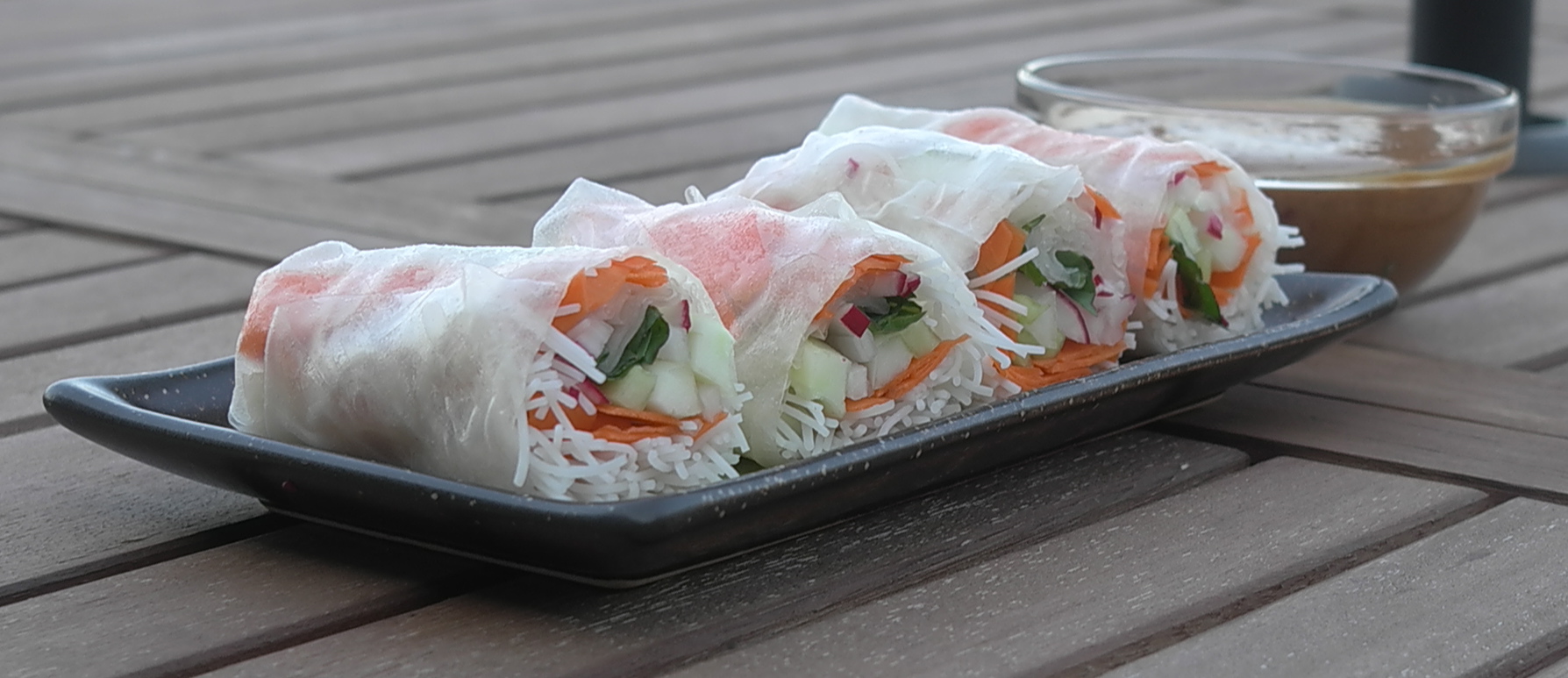
These are like little salads you can eat with your hands. You can really improvise and use whatever vegetables you have on hand. Also, you can add shrimp, chicken, or tofu to these for some more protein. However, I liked them nice and light for these hot summer days. You may have to go to a larger store or an Asian market to get the rice paper wrap. The 3rd store was a charm for me–I picked some at at Pacific Green on Court Street in Cobble Hill. As a bonus, I also picked up some of their wonderfully fresh-cut watermelon for dessert.
These fresh summer rolls (as opposed to deep-fried spring rolls) are great to bring to a picnic or anywhere else. Just put a layer of damp paper towels on the bottom, seal them tightly with saran wrap, and they should be good to go a day in advance. If you want to store them in layers, put a layer of paper towels between the layers of rolls to keep them from sticking to each other.
The quantity of the ingredients list is flexible. It depends on your preference: you can make each roll with as much of each ingredient as you choose. One cucumber and one carrot will be good for about 8 rolls, which are each cut in half.
Ingredients:
For the rolls:
- 1 package very thin rice noodles, cooked according to package directions
- 1 cucumber, cut in half cross wise and then into thin strips
- 1 carrot, shaved with a vegetable peeler
- 4 radishes, cut into matchsticks (First cut the radish into thin slices. Then, cut each round slice into strips.)
- 20 or so whole basil leaves (fewer if your leaves are bigger)
- 20 or so whole cilantro leaves
- 20 or so whole mint leaves (fewer if your leaves are bigger)
- 1 package rice paper wrappers: they look like this
For the dipping sauce:
- 2 tablespoons peanut butter
- 2 tablespoons rice vinegar
- 2 tablespoons hoisin sauce
- 2 teaspoons soy sauce
- 2 teaspoons sugar
- 1/2 teaspoon red pepper flakes
- water as needed to thin out the sauce
- optional: one clove or garlic, minced
Directions:
- If you did not cook the noodles ahead of time already, get those going according to package directions.
- Prepare the dipping sauce: mix all ingredients together. Thin out with a few tablespoons or water at at time until you get your desired consistency. I added a bit more vinegar as well,so just taste and keep adjusting the amounts until you like the flavor.
- Fill a large sauté pan with warm water. Hopefully it is large enough for you to quickly dip the wrappers in without crushing them. The wrappers I got this time were HUGE (larger diameter than any of my pans) so I just dipped one half at a time. Here’s how it works: The wrapper needs to sit in warm water for a just a few seconds to become pliable so you can actually wrap with it. Then, you need to work fairly quickly but carefully so that you don’t tear the wrapper. Just do one at a time.
- After softening the wrapper, place it carefully on a work surface. Fill the middle with the goods: a small handful of noodles, a few cucumber sticks, a few radishes, a few carrots, a few of each: cilantro, basil, mint, whatever else you feel like.
- Then, get rolling. Fold the top and bottom up to close off the edges of your roll. Then, start wrapping from one side until you get the shape you want. You’ll need to be a little forceful with your vegetables to get them into roll-shape. Its ok, they can handle it.
- Cut each roll in half, and serve with dipping sauce on the side.

My parents went out east to go for a bike ride. They came back with a bushel of corn. Apparently it was a bargain. As a result, I got a fridge full of corn! (Yes, you are supposed to refrigerate corn if you are not going to use it that day.)
What to do with the surplus of corn? I wanted to make a corn chowder that didn’t require me to drink a cup of heavy cream. Enter coconut milk. This chowder would go really well with a side of basmati rice. This recipe comes from The Food Network’s site.
Ingredients:
- 4 ears corn
- 2 cups diced red-skinned potatoes (about 12 ounces)
- 3/4 cup chopped scallions
- 2 tablespoons grated peeled fresh ginger
- 4 cloves garlic, smashed
- 8 black peppercorns
- 1 stalk lemongrass, cut into thirds (optional)
- 4 tablespoons unsalted butter
- Kosher salt
- 1 red jalapeno pepper, seeded and minced ( I used green jalapeño–keep the seeds in if you want some more heat)
- 1 13.5-ounce can coconut milk (I used the light version)
- 8 fresh basil leaves
- 8 fresh mint leaves
- 4 radishes, thinly sliced
- 1/4 cup roughly chopped fresh cilantro
- Juice of 1/2 lime, plus lime wedges for garnish
- 1 tomato, seeded and diced
Directions
- Cut off the corn kernels; set aside. Combine the cobs, 1 cup potatoes, 1/2 cup scallions, 1 tablespoon ginger, the garlic, peppercorns and 5 cups water in a pot. Smash the lemongrass, if using, and add to the pot. Bring to a boil, then simmer for 25 to 30 minutes.
- About 10 minutes before the broth is finished, melt the butter over medium-high heat in a separate pot. Add the remaining 1 cup potatoes, season with salt and cook until slightly soft, 5 minutes. Add the remaining 1 tablespoon ginger and the jalapeño; cook 1 minute. Add the corn kernels; cook until the vegetables are just tender, 3 to 4 minutes.
- Strain the broth, pressing out as much liquid as possible; discard the solids. Add 2 cups of the strained broth to the potatoes and corn; bring to a boil, cover and simmer for 10 minutes. Add the coconut milk, basil and mint; season with salt. Stir until simmering. Remove from the heat and add the radishes, cilantro and lime juice. Top with diced tomato and the remaining 1/4 cup scallions and serve with lime wedges.

When making this salad, I thought it was going to be really weird. Then, I couldn’t stop eating it. The combination of spicy and sweet is definitely addicting, so watch out. Sweet Corn Charlie had arava, which looks like a cantaloupe from the outside and a honeydew from the inside. It is as sweet as candy, with none of the HFCS. I also used cantaloupe. However, you can use any melon you want. The original recipe called for blackberries, but those were not an option at the farmstand , so I used raspberries. The original recipe is from Food and Wine magazine.
Ingredients:
- 2 tablespoons extra-virgin olive oil
- 2 tablespoons fresh lemon juice
- 1 small shallot, thinly sliced
- 1/4 teaspoon crushed red pepper
- Salt
- Freshly ground pepper
- 1/2 green melon (about 1 1/4 pounds)—halved, cut into wedges, peeled and cut into bite sized pieces
- 1/2 orange or yellow melon (about 1 1/4 pounds)—halved, cut into wedges, peeled and cut into bite-sized pieces
- 1 cup raspberries
- 2 ounces feta cheese, crumbled
- 2 tablespoons snipped chives
Directions:
- In a small bowl, combine the olive oil, lemon juice, shallot, and crushed red pepper and season with salt and pepper.
- Arrange the melon and raspberries on a platter. Drizzle the dressing over the fruit. Garnish the salad with the feta and snipped chives and serve.

 fresh from brooklyn