
That is not a typo. This is Mexican Street Corn made with Indiana Sweet Corn. I had my first Mexican grilled street corn in Red Hook by the ball fields several years ago, and now I’m hooked. Clearly not the healthiest of side dishes, it went really well with a lighter grilled tequila lime Amish chicken breasts. (Let me know if you want that Barefoot Contessa recipe)
To make it into a much-less-messy-salad-version, just follow all the directions below and then cut the corn off the cob once it is cool enough to handle. Otherwise be sure to have lots of napkins nearby.
This recipe comes from Cook’s Illustrated’s Summer Grilling 2011 issue.
Ingredients
- vegetable oil for cooking grate
- 1/4 cup regular or light mayonaise
- 3 tablespoons sour cream
- 3 tablespoons minced fresh cilantro leaves
- 1 medium garlic clove, minced
- 3/4 teaspoon chili powder
- 1/4 teaspoon ground black pepper
- 1/4 teaspoon cayenne pepper (optional)
- 4 teaspoons juice from 1 lime
- 1 ounce queso fresco or Cotija cheese , crumbled
- 4 teaspoons vegetable oil
- 1/2 teaspoon kosher salt or 1/4 teaspoon table salt
- 6 large ears corn, husks and silk removed
Directions
- Turn all gas grill burners to high and heat grill with lid down until very hot, about 15 minutes. Scrape and oil grate (Dip wad of paper towels in vegetable oil; holding wad with tongs, wipe cooking grate.)
- While grill is heating, combine mayonaise, sour cream, cilantro, garlic, 1/4 teaspoon chili powder, black pepper, cayenne, lime juice, and cheese in large bowl; set aside.
- In a small bowl, combine oil, salt, and remaining 1/2 teaspoon chili powder. Brush the oil mixture onto the corn.
- Grill corn over high heat, turning occasionally, until lightly charred on all sides, 7 to 12 minutes total. Remove from grill and place in bowl with mayonaise mixture; toss to coat evenly. Serve immediately.

This salad was a huge hit last night. Perhaps it was the backdrop of a beautiful sunset that swayed people’s opinions, but I’m going to give all the credit to the dressing. I’m not typically a ranch dressing kind of gal, but this one was tangy (I was a bit liberal with the vinegar) and not too heavy. This recipe made a good amount of dressing for 4 cups of thinly sliced green cabbage, 2 chopped tomatoes, and 1 jicama peeled and cut into 1/ 2 inch cubes. However, it would be great over any vegetable with a good crunch factor that you have lying around…do I hear the kohlrabi from last week’s CSA calling to you?
I found this gem of a recipe on Smitten Kitchen, and it originated from Gourmet magazine.
Ingredients
- 1/2 cup well-shaken buttermilk
- 2 tablespoons mayonnaise
- 2 tablespoons cider vinegar
- 2 tablespoons minced shallot
- 1 tablespoon sugar
- 3 tablespoons finely chopped chives
Directions:
1. In a medium bowl, whisk together all ingredients through the sugar.
2. Once the sugar is dissolved, stir in the chives.
3. Refrigerate until ready to serve.
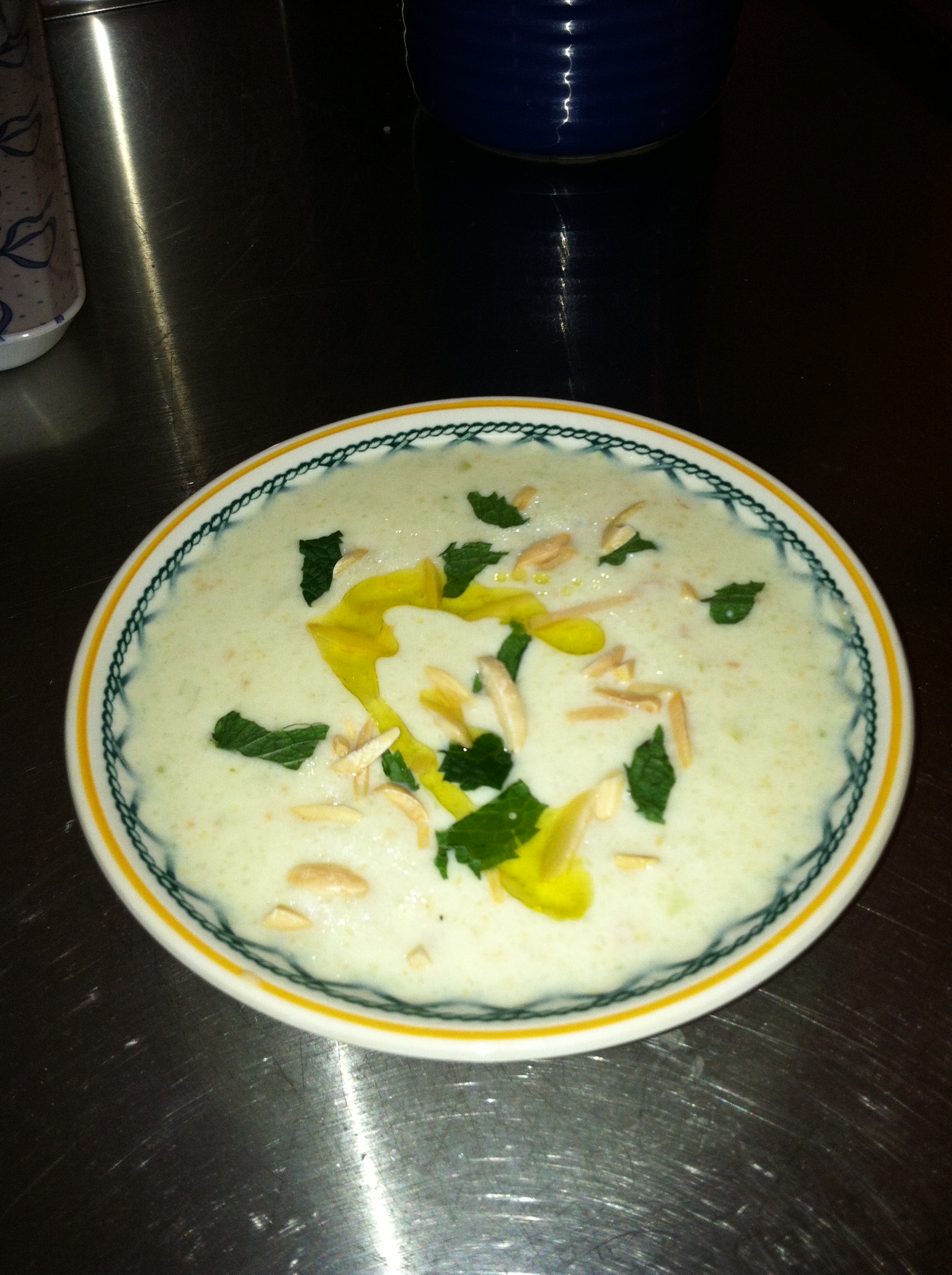
Thanks to Food and Wine for this refreshing chilled soup recipe. Here’s the link to the original. I pretty much followed it exactly, except I substituted 1 tablespoon red wine vinegar for the sherry vinegar, as there was no sherry vinegar at the store. Also, I had a hard time straining out the solids, so I didn’t do much more than get a few colanders dirty before giving up on straining altogether.
This is not the kind of soup to make into a meal. Instead, it would be perfect at the very start of dinner or between courses as a sort of palate cleanser (thanks to my husband for that idea). The recipe says it makes 6 servings, but I think this would make more like 8-10 smaller cups. In fact, this would be the perfect thing to use the 12 (!) espresso cups that I registered for 6 years ago, since I’m not usually making 12 cups of espresso at a time.
Ingredients:
- 1 cup stale, crustless 1/2-inch white country bread cubes
- 1 cup white grape juice
- 1 1/4 cups blanched sliced almonds (I used slivered)
- 1 cup peeled, seeded and diced cucumber (This was one large cucumber for me)
- 1 Granny Smith apple—peeled, seeded and chopped
- 1 cup seedless green grapes
- 1 garlic clove
- 3 tablespoons sherry vinegar (I used a small amount of red wine vinegar instead)
- 1/4 cup extra-virgin olive oil, plus more for garnish
- 1 cup buttermilk
- Salt
- Freshly ground pepper
- Shredded mint leaves, for garnish
- Preheat the oven to 350°. In a small bowl, soak the bread in the grape juice for 5 minutes, pressing to soften.
- Spread the almonds in a pie plate and toast in the oven for 6 minutes, until lightly golden; let cool. Transfer 1 cup of the almonds to a blender. Add the bread, cucumber, apple, grapes, garlic, vinegar and 1/4 cup of olive oil. Puree until smooth. Strain the soup through into a bowl, pressing on the solids.(or make a mess with colanders in your kitchen). Whisk in the buttermilk and season with salt and pepper. Refrigerate until chilled, at least 30 minutes.
- Pour the gazpacho into cups and garnish with the mint and remaining 1/4 cup of almonds. Drizzle with olive oil and serve.

Thanks to Local Roots NYC CSA for posting this recipe from Kitchn. Here is my adapted version of it. Clearly, I’m on a lemon yogurt kick. I made the farro a day in advance to cut the prep time tonight. With that prep out of the way, the salad took me about 15 minutes to make.
Ingredients:
- 1 cup farro
- 2 cups water
- salt
- 1/2 pound peas, shelled
- 2 baby leeks, white and light green parts only, thoroughly washed (I like to soak it them in a bowl of water a few times)
- 3 tablespoons plain yogurt (I used Stonyfield Organic Low Fat)
- 2 tablespoons extra virgin olive oil
- Juice of 1/2 lemon
- black pepper
Directions:

UPDATE: I made the salad again, and this time I took a photo of it. I used 1 clove of regular garlic instead of garlic scopes this time around.
I’ve heard a lot of people talking about how to deal with the mess from peeling beets. I know, I know, I am part of some riveting conversations. Below, I explain a trick I learned.
I never cooked with fava beans before. The internet warned me that they are time-consuming, and this is true. However, the internet also let me know it would be worth the time. Also true. Wow, the internet is so smart.
Ingredients:
- 3 medium-sized beets
- 1/2 pound fava beans
- 1/4 cup crumbled feta
- 2 garlic scapes
- juice of 1/2 juicy lemon
- 2 tablespoons olive oil
- 1 tablespoon red wine vinegar
- salt and pepper to taste
Directions:
1. First, you need to get the beets in the oven. Jack Bishop, author of “Year in the Vegetarian Kitchen” suggests heating an oven to 400 degrees, wrapping the beets (cut off any dangling roots and the stalks) in two layers of aluminum foil, and cooking for 1-1.25 hours. After an hour, test your beets to see if a skewer glides easily through them. If so, they are done. Then, allow the beets to cool a bit before handling. Last, take a wad of paper towels to rub off the skin. (that’s the cool trick!) The last step for the beets is to cut them into the shape you want for your salad. Then, place the beets in a medium-sized bowl.
2. Once your beets are in the oven, start to deal with the beans. Get some water boiling. While you are waiting for it to boil, peel off the stringy part to reveal the beans inside. As a bonus, you will discover that the inside of the pod is pillowy. Fascinating! The sad part will be when you realize that you don’t get a heck of a lot of beans for all that work. But you will get over it once you eat the beans (says the internet).
3. Next, put the beans in boiling water for a little under a minute. While that’s happening, prepare a bowl of ice cold water. Then, spoon out the beans and put them directly into the cold water to stop the cooking.
4. One more step before you eat the beans. Pinch off the outer shell to get to the edible part. You did it!
5. In a food processor (I used the mini prep), combine garlic scapes, lemon juice, olive oil, red wine vinegar, and a bit of salt and pepper to taste. Pour the dressing over the beets and stir to coat the beets
6. Arrange the dressed beets on a serving dish. Top with feta cheese and beans. (You can toss the ingredients all together, but the result will be a very pink salad.) Enjoy!

I was wondering what to do with all my radishes, beyond slicing and sprinkling them over greens. This recipe used up the rest of ours from our share, and the radishes and pickle relish add some great flavor to the potatoes. This is one of several recipes that I made from Food and Wine’s most recent Grilling issue (although there is no grilling involved for this recipe, I’ll be posting the grilled kale recipe soon). I like that it is a make-ahead dish, so it is absolutely no work on the day you serve it. It stays good for two days after you make it.
At this point, I have several recipes on this blog that feature the radish. You can just click on “radish” in the right column, and find other recipes that use this vegetable. Have you done anything exciting with your radishes? Let me know…I’d love to know and share more ways to use these, as I think more are arriving from the farm this week!
Ingredients:
- 3 pounds medium Yukon Gold potatoes, halved but not peeled
- Salt
- 1/2 cup mayonnaise
- 1/4 cup sweet pickle relish
- 1 tablespoon white vinegar
- 1 teaspoon dry mustard powder
- 1/2 teaspoon sweet smoked paprika (I actually used smoked hot paprika because that’s what I had on hand)
- 1/2 teaspoon freshly ground black pepper
- 1/4 teaspoon cayenne pepper
- 6 red radishes, 1/3-inch dice
- 3 celery ribs, cut into 1/3-inch dice
- 1/2 medium red onion, cut into1/3-inch dice
Directions:
- In a large pot, cover the potatoes with water, add a large pinch of salt and bring to a boil. Cook over moderately high heat until tender, about 20 minutes. Drain the potatoes and return them to the pot. Shake the pot over moderately high heat for about 10 seconds to dry the potatoes. Transfer the potatoes to a large rimmed baking sheet and let cool completely. Peel the potatoes and cut into 1-inch pieces.
- In a large bowl, blend the mayonnaise with the relish, vinegar, mustard powder, paprika, black pepper, cayenne, radishes, celery and onion. Gently fold in the potatoes and season with salt (I did not add any more salt at this point, I would wait until you serve it to decide if more salt is needed). Refrigerate the potato salad for at least 4 hours or overnight. Serve cold or lightly chilled.

This recipe comes from Food and Wine’s March 2012 issue. The kale, carrots, and garlic came from the Carroll Garden’s farmer’s market.
Ingredients:
- 1 cup long-grain brown rice
- 1 cup red quinoa
- 1/4 cup extra-virgin olive oil
- 1 small onion, finely diced
- 1 carrot, sliced crosswise 1/4 inch thick
- 1/4 pound shiitake mushrooms, stems discarded and caps thinly sliced
- 1 small zucchini, halved lengthwise and sliced crosswise 1/4 inch thick
- Salt
- 1 head of broccoli—stems peeled and sliced into coins, heads cut into small florets
- One 12-ounce bunch kale, large stems discarded
- 1/4 cup tahini, at room temperature
- 1/2 cup fresh lemon juice
- 2 garlic cloves, minced
- 2 tablespoons warm water
- 1/4 teaspoon crushed red pepper
- 1 ripe avocado, cut into 1/2-inch dice
- 1 cup mung bean sprouts (I omitted these)
Directions:
- In a medium saucepan, cover the brown rice with 2 inches of water and bring to a boil. Cover and cook over low heat until the rice is just tender, about 40 minutes. Drain and return the rice to the saucepan; keep covered.
- Meanwhile, in a small saucepan, combine the quinoa with 2 cups of water and bring to a boil. Cover the saucepan and simmer over low heat until the quinoa is tender and all of the water has been absorbed, 20 minutes.
- In a large skillet, heat 2 tablespoons of the oil. Add the onion and cook over moderate heat until translucent, about 4 minutes. Add the carrot and cook until starting to soften, about 3 minutes. Add the shiitake, cover and cook until tender, about 4 minutes. Add the zucchini, season with salt and cook, stirring a few times, until tender, about 3 minutes. Transfer to a bowl.
- Add the remaining 2 tablespoons of oil to the skillet. Add the broccoli, cover and cook over moderate heat, stirring a few times, until deep green, 5 minutes. Add the kale, cover and cook, stirring a few times, until the broccoli and kale are just tender, 4 minutes. Season with salt. Stir in the other vegetables.
- In a small bowl, whisk the tahini with the lemon juice, garlic, warm water and crushed red pepper. Season with salt.
- Transfer the brown rice and quinoa to bowls. Top with the cooked vegetables, diced avocado and bean sprouts (if using). Serve, passing the tahini sauce at the table.

I recently got back from a wonderful weekend of cooking at Peter Berley’s kitchen on the North Fork of Long Island. The theme of the weekend was cooking with local foods in the winter. This salad stood out to me because of its unusual combination of flavors that seemed to go perfectly together. I had a healthy serving of it with some homemade foccacia for lunch on Sunday at the workshop. I enjoyed it so much that I made it on my own again Sunday night for dinner with friends. Every last piece of parsley was eaten up. Prior to trying this salad, I was not a fan of the fennel. However, shaving fennel with a mandoline helps to keep the flavor mild and delicious. This salad is a light and fresh complement to any meal.
Thanks to Peter Berley for this recipe and many others throughout the weekend. Your creativity in the kitchen is very inspiring!
Ingredients:
- 1/4 cup shaved or very thinly sliced red onion
- 1/4 cup lemon juice
- 1/2 teaspoon salt
- 1 very large or 2 medium fennel bulbs, shaved or very thinly sliced
- 1 cup loosely packed cup fresh flat-leaf parsley leaves
- 1/4 cup coarsely chopped celery leaves
- 2 tablespoons extra virgin olive oil
- freshly ground black pepper
- 24 pitted green, brine-cured olives, such as Picholine, sliced
- shaved parmesan to sprinkle on top (optional)
Directions:
- Toss the onion with 1/4 cup lemon juice and 1/4 teaspoon salt. Cover and refrigerate for about 30 minutes.
- In a large bowl, toss the fennel, parsley, olives, and celery leaves with the olive oil and the onion and its liquid. Season with 1/4 teaspoon salt and pepper to taste.Taste and adjust seasoning, adding more olive oil or lemon if needed.
- Sprinkle with parmesan (optional) and serve.
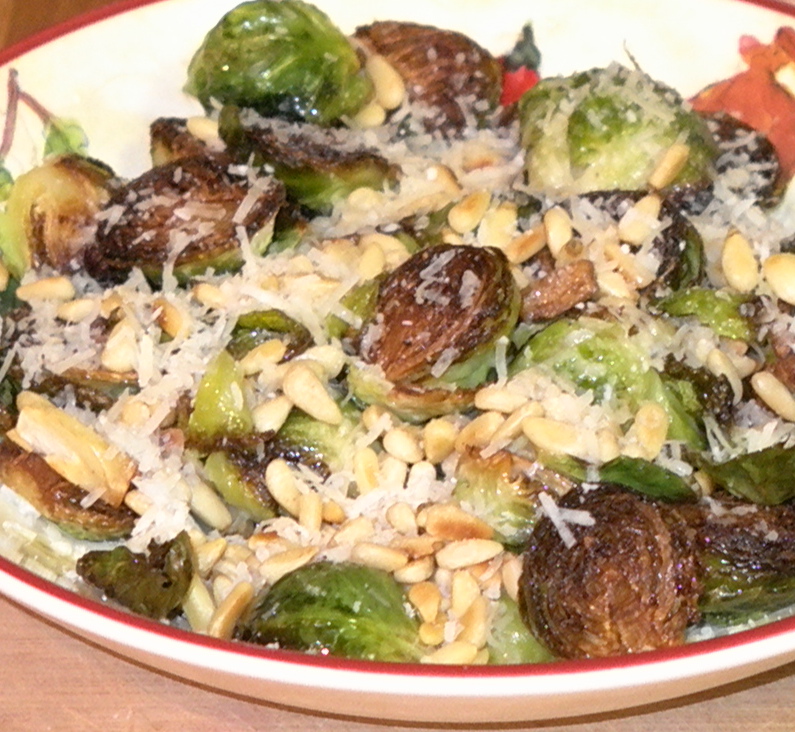
Hide your alfalfa…This recipe might make all other sprouts jealous.
GQ just named Brooklyn the coolest city on the planet (the whole PLANET, people), which is exciting because I did not realize that our borough had become an independent city once again. Also, I have a good feeling that this eponymous recipe will really catch on since the “city” I call home was given this honor by the same magazine that has articles which explain, “How to Dump Her Like a Man.”
I got the method for this recipe from Mark Bittman’s How To Cook Everything Vegetarian. A few changes: he calls for balsamic vinegar, which I omitted. Also, I added the pine nuts and parmesan, and sliced the garlic (he suggested leaving the garlic cloves whole).
Ingredients:
- 1 pound Brussels sprouts
- 1/4 cup extra virgin olive oil
- 5 cloves garlic, cut into thick slices (3-5 slices per clove)
- Salt and freshly ground black pepper (to taste)
- 1/4 cup pine nuts
- 2 tablespoons freshly grated Parmegiano-Reggiano cheese (the “real” kind with the name imprinted on the rind)
Directions:
- Preheat the oven to 450 degrees. Trim the hard edge of the stem from the Brussels sprouts, then cut each in half through its axis. Put the oil in a large ovenproof skillet over medium-high heat. When it shimmers, arrange the sprouts in one layer, cut side down. Toss in the garlic and sprinkle with salt and pepper.
- Cook, undisturbed, until the sprouts begin to brown, 5-10 minutes, then transfer to the oven. Cook, shaking the pan occasionally, until the sprouts are quite brown and tender. (Bittman recommends 30 minutes, but I typically take them out of the oven in 15-20. I think it really depends on the size of your sprouts.)
- While the sprouts of cooking, heat a small skillet over medium-low heat. Toast the pine nuts in the dry skillet for a few minutes, shaking frequently to avoid burning. Remove from heat once the pine nuts are lightly browned and fragrant.
- Put the sprouts mixture in a serving dish, and sprinkle with the pine nuts and cheese. Serve hot or warm.

New York City is the big apple, so I went to town with some Empire apples from the Carroll Street Farmer’s Market this morning. I don’t own a food mill, and I dislike peeling apples because I feel like I am wasting so much food in the process (plus I was feeling lazy). So, I just made this applesauce with the peels. You can peel the apples for a more traditional take on applesauce, but you won’t get this gorgeous pink hue. It will also take a lot longer. Since I was planning on canning the sauce, I wanted to save my time and energy for that step.
Applesauce is not just for kids or other people without teeth! I’m looking forward to putting this applesauce on latkes come December.
For more fun and seasonal preserving projects , take a look at my strawberry jam post from the spring, or my pickled green beans post from the summer. For detailed directions about canning, the Peach Salsa post is the one to check out.
Ingredients (if you want less applesauce, just cut the recipe in half–they might cook a bit more quickly)
- 6 pounds of apples ( I used 18 Empire apples)
- 1/4 cup bottled lemon juice
- 1 cup water
- 2 Tablespoons sugar (optional; to taste)
- Combine lemon juice and water in a very large pot.
- Core and chop apples into approximately 1-inch pieces, and toss into the pot with the lemon juice mixture as you go to prevent apples from discoloring.
- Bring to a boil. Then reduce heat, cover, and simmer for 10-20 minutes, stirring occasionally, until apples are tender.
- Blend in batches in a food processor, or use an immersion blender.
- Return applesauce to the pot, and add sugar to taste. Heat briefly until sugar is dissolved.
- Refrigerate and serve within 5 days. Alternatively, you can preserve it in jars for up to a year: I processed 8 half-pint jars in a boiling water bath for 10 minutes.

 fresh from brooklyn