
New York City is the big apple, so I went to town with some Empire apples from the Carroll Street Farmer’s Market this morning. I don’t own a food mill, and I dislike peeling apples because I feel like I am wasting so much food in the process (plus I was feeling lazy). So, I just made this applesauce with the peels. You can peel the apples for a more traditional take on applesauce, but you won’t get this gorgeous pink hue. It will also take a lot longer. Since I was planning on canning the sauce, I wanted to save my time and energy for that step.
Applesauce is not just for kids or other people without teeth! I’m looking forward to putting this applesauce on latkes come December.
For more fun and seasonal preserving projects , take a look at my strawberry jam post from the spring, or my pickled green beans post from the summer. For detailed directions about canning, the Peach Salsa post is the one to check out.
Ingredients (if you want less applesauce, just cut the recipe in half–they might cook a bit more quickly)
- 6 pounds of apples ( I used 18 Empire apples)
- 1/4 cup bottled lemon juice
- 1 cup water
- 2 Tablespoons sugar (optional; to taste)
- Combine lemon juice and water in a very large pot.
- Core and chop apples into approximately 1-inch pieces, and toss into the pot with the lemon juice mixture as you go to prevent apples from discoloring.
- Bring to a boil. Then reduce heat, cover, and simmer for 10-20 minutes, stirring occasionally, until apples are tender.
- Blend in batches in a food processor, or use an immersion blender.
- Return applesauce to the pot, and add sugar to taste. Heat briefly until sugar is dissolved.
- Refrigerate and serve within 5 days. Alternatively, you can preserve it in jars for up to a year: I processed 8 half-pint jars in a boiling water bath for 10 minutes.
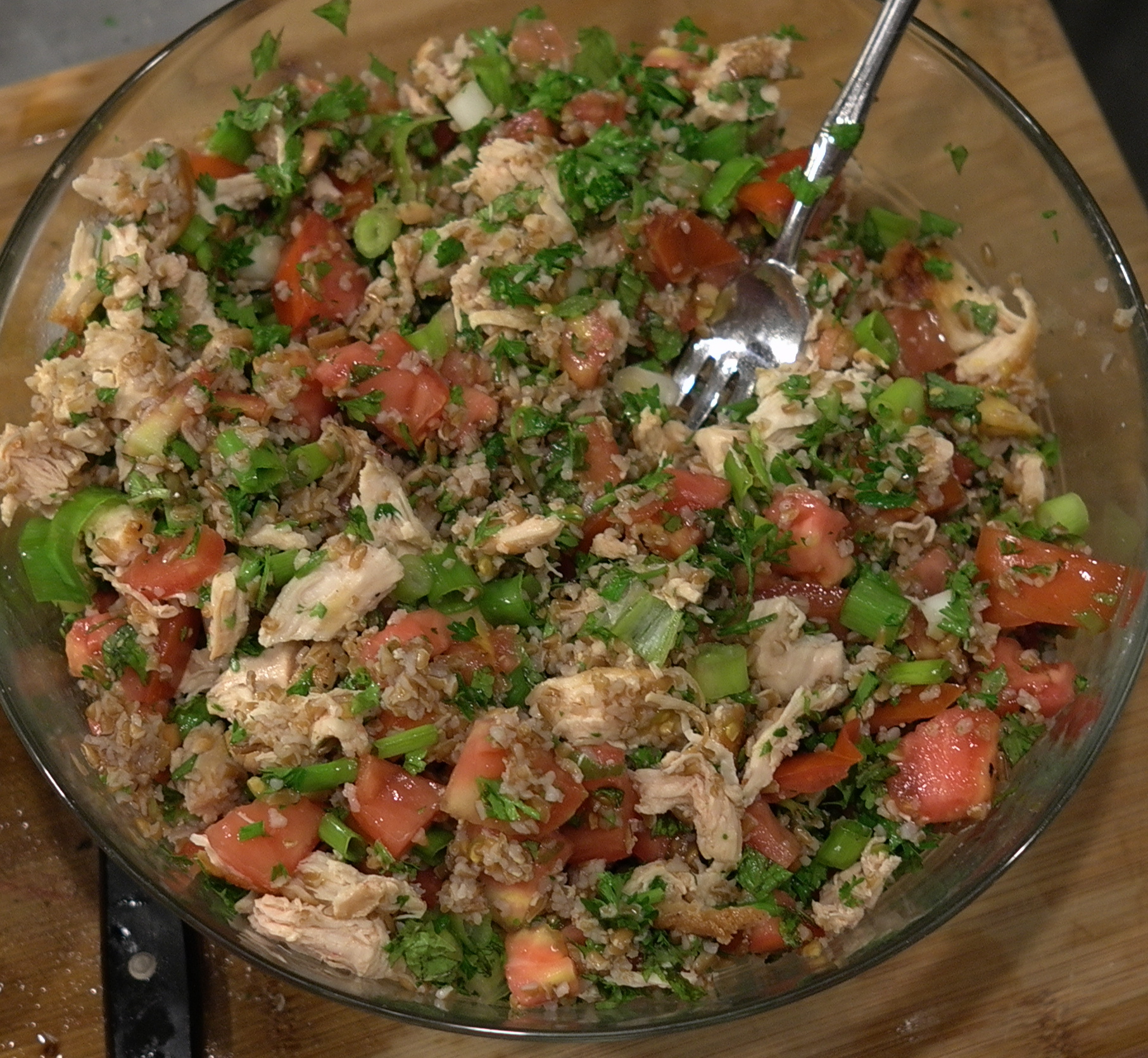
This recipe from Cooking Light’s September, 2011 magazine was great for dinner and then even better for lunch the next day. I’ll admit that my “drizzle” turned into more of a thicker sauce. It may not have looked as pretty, but it tasted delicious. For those who missed the memo: yes, I am eating meat. I can hardly believe it still myself. To make this vegetarian, use chickpeas instead of chicken. The recipe called for chicken thighs. I got this chicken at Forager’s in DUMBO, where they get all their meat locally. They also only have chiken breasts, so I used those instead.
Ingredients
- 1 1/4 cups water
- 1 cup uncooked bulgur, rinsed and drained
- 2 tablespoons olive oil, divided
- 1 teaspoon kosher salt, divided
- 1/2 pound skinless, boneless chicken thighs
- 1/2 teaspoon freshly ground black pepper
- 3 cups chopped tomato
- 1 cup chopped fresh parsley
- 1 cup chopped fresh mint
- 1 cup chopped green onions
- 1 teaspoon minced garlic
- 1/4 cup tahini (roasted sesame seed paste)
- 1/4 cup plain 2% reduced-fat Greek yogurt
- 3 tablespoons fresh lemon juice
- 1 tablespoon water
Preparation
1. Combine 1 1/4 cups water, 1 cup bulgur, 1 tablespoon olive oil, and 1/2 teaspoon salt in a medium saucepan; bring to a boil. Reduce heat; simmer for 10 minutes (do not stir) or until the liquid almost evaporates. Remove from heat; fluff with a fork. Place bulgur in a medium bowl; let stand 10 minutes.
2. Heat the remaining 1 tablespoon oil in a large nonstick skillet over medium-high heat. Add chicken to pan; sprinkle with 1/4 teaspoon salt and black pepper. Sauté for 4 minutes on each side or until done; shred chicken. Combine bulgur, chicken, tomato, and next 4 ingredients (through garlic) in a large bowl; toss gently.
3. Combine remaining 1/4 teaspoon salt, tahini, and remaining ingredients in a small bowl, stirring with a whisk. Drizzle over salad.
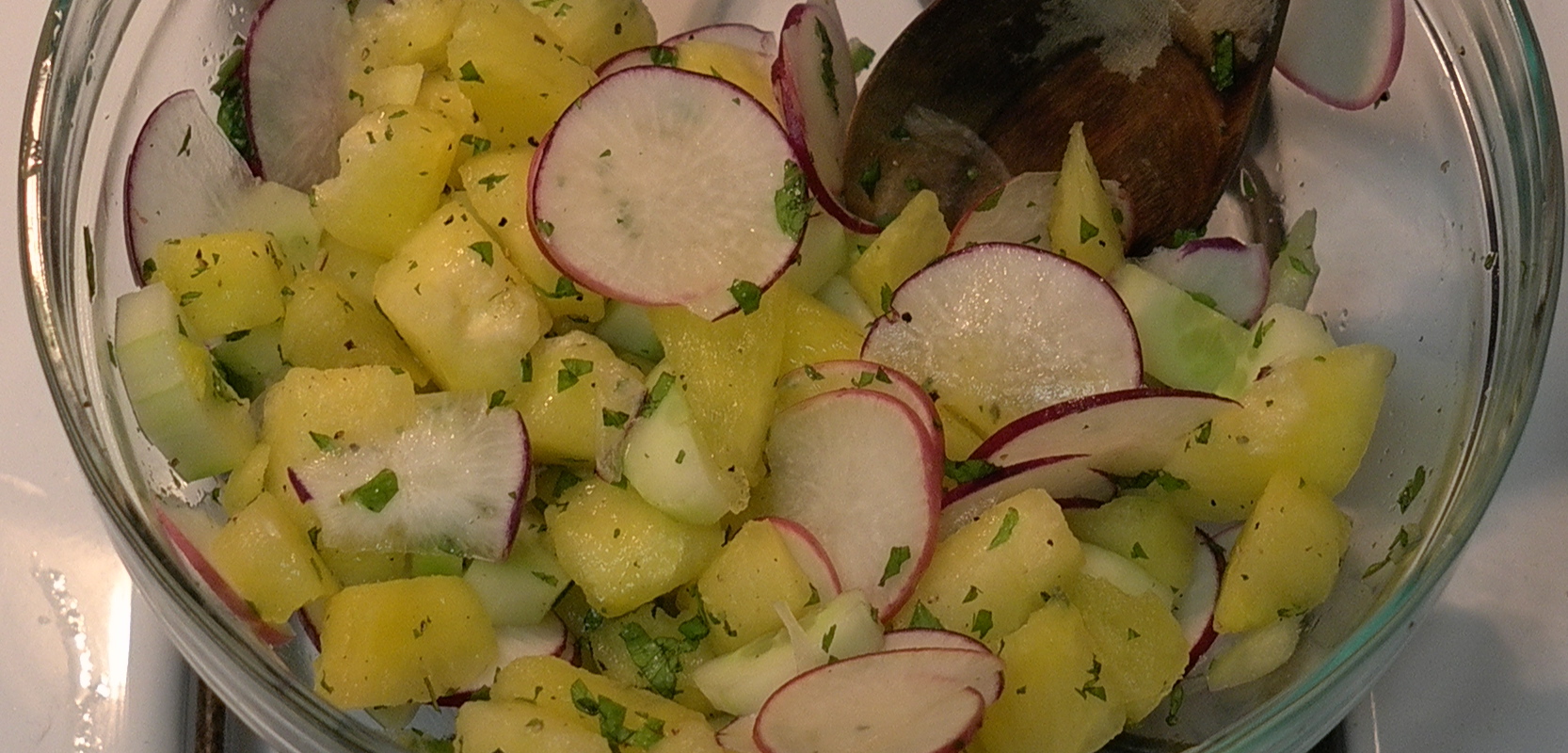
It’s been a busy month of moving and starting the school year all over again. This weekend my knives and cutting boards miraculously emerged from boxes, and the internet is somehow up and running. Here is the first fresh from brooklyn post from my new home, also (conveniently so I would not have to rename this blog) in Brooklyn.
Tonight’s salad was served alongside greek burgers (let me know if you want that recipe, too), which are bursting with rich flavor. It is a light salad that freshens up a heavy meal. I love the balance of sweet watermelon with peppery radish. It also helps that this salad could not possibly be any easier. Although it is fall, this week’s CSA shipment included incredibly juicy yellow watermelon. No one is complaining…we are smiling as we to cling to the last flavors of summer as long as possible.
Both the greek burgers and this salad come from Cook’s Illustrated’s America’s Test Kitchen.
Ingredients:
4 cups cubed, seeded watermelon
1 cucumber, peeled, halved, seeded, and sliced
1 cup thinly sliced radishes (I used a mandoline)
1 tablespoon lime jice
1/4 cup chopped mint
Directions:
Combine all ingredients in a large bowl. Season with salt and pepper.

Sang Lee Farms never ceases to surprise me. Even Irene, the tropical storm which left towns flooded and people without electricity, was not enough to stop them from delivering these gorgeous carrots to the DUMBO CSA. I love how the carrots I now eat are orange, yellow, and purple. Bugs Bunny would be so totally jealous.
Do you have leftover cilantro and ginger from that chilled soup? You’re in luck: this salad can help you use up the rest of it. Are you genetically predisposed to think cilantro tastes like soap? You’re in luck: you can use parsley instead. Thanks to Alice Waters and The Art of Simple Food for this recipe!
Baton Disclaimer: Waters suggests cutting the carrots into little batons. How lovely. Perhaps when I one day get my dream cutting board named Fred will I make beautiful batons as she suggests. For now, my carrots will have to settle with being simply “batonesque.”
Ingredients:
- 4 large carrots (I used 7 smaller ones)
- salt
- 1/2 teaspoon each cumin and coriander, toasted and ground
- One 1-inch piece of fresh ginger, peeled and finely grated
- a pinch of cayenne
- juice of 1/2 lime
- 2 tablespoons extra virgin olive oil
- 2 tablespoons chopped cilantro or parsley
Directions:
- Peel carrots and cut into little batons (see baton disclaimer above) about 2 inches long and 1/4 inch square. Cook in salted boiling water until carrots are almost tender; they should be pliable, but still crisp in the center. (This only took a few minutes) Drain and season with salt.
- In a small bowl, mix together cumin, ginger and cayenne. Pour over the warm carrots and toss gently. Marinate for a few hours or in the refrigerator overnight.
- Just before serving, whisk together lime juice, olive oil and parsley or cilantro. Pour over carrots and toss gently. Taste for seasoning and add salt or lime juice as needed.
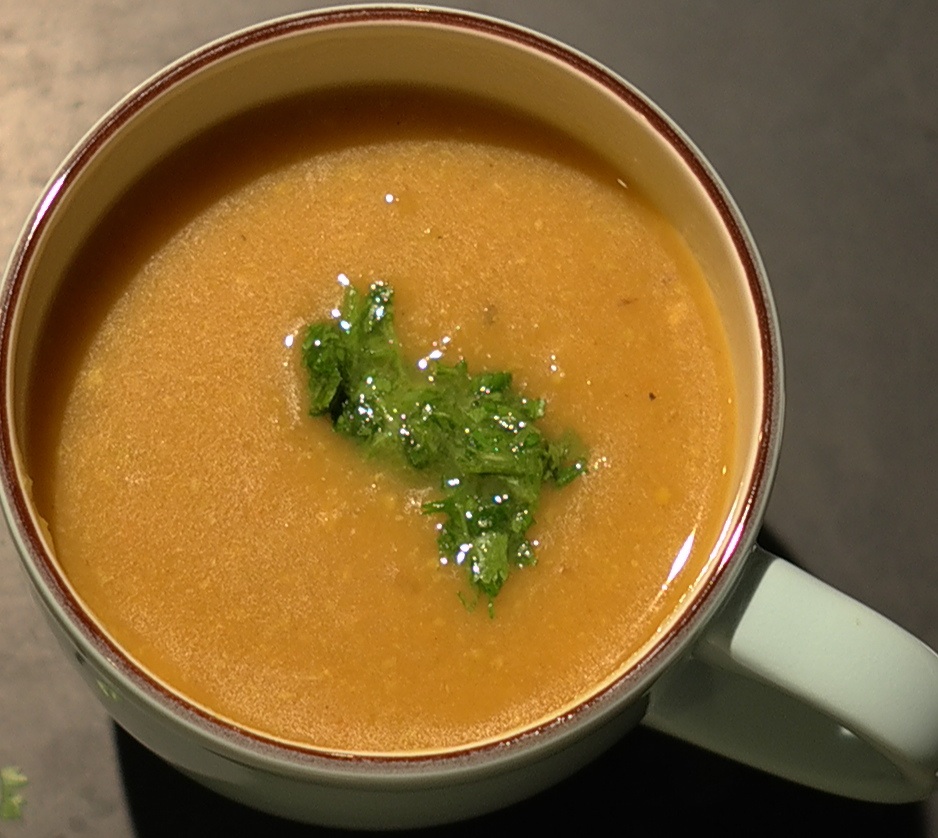
The evenings here in Brooklyn have been crisp and breezy; a reminder that fall is just around the corner. This soup is perfect for these last weeks of summer because you can enjoy it hot or cold. It is delicious served with a crisp tortilla layered high with sauteed eggplant, tomato and goat cheese. Thanks to Jack Bishop, author of A Year in the Vegetarian Kitchen for this and so many other tasty recipes, including the crisp tortilla one I just mentioned.
Ingredients:
- 5 tablespoons extra virgin olive oil
- 1 1/2 pounds yellow summer squash, chopped
- 1 medium onion, chopped
- 1 tablespoon gingerroot
- 3 medium garlic cloves, minced
- 2 teaspoons curry powder (I had a red curry spice mix which I added to the original curry in give the soup some heat)
- 6 cups vegetable broth
- 8 ounces starchy potato (either 1 large or 2-3 smaller ones)
- salt
- 1/2 cup packed fresh cilantro leaves
- 1 tablespoon fresh lime juice
Directions:
- Heat 2 tablespoons of the oil in a Dutch oven over medium-high heat until shimmering. Add the squash and onion and cook, stirring occasionally, until golden brown, 8-10 minutes. Stir in the ginger, garlic, and curry powder and cook until just fragrant, about 1 minute. Add the broth, potato, and salt to taste and bring to a boil. Reduce the heat to medium-low and simmer until the potato is very tender, about 25 minutes.
- Puree the soup in batches in a blender (or use an immersion blender) until very smooth. Adjust the seasonings. Transfer the soup to an airtight container, cover, and refrigerate until well chilled, at least several hours (unless you want to have the soup hot!). The soup can be refrigerated for several days.
- When you are ready to serve the soup, puree the cilantro, lime juice, and remaining 3 tablespoons oil in a blender until smooth. Add salt to taste.
- Taste the chilled soup and adjust the seasonings, adding salt as needed. Ladle the soup into small bowls. Drizzle some cilantro puree over each bowl and serve.
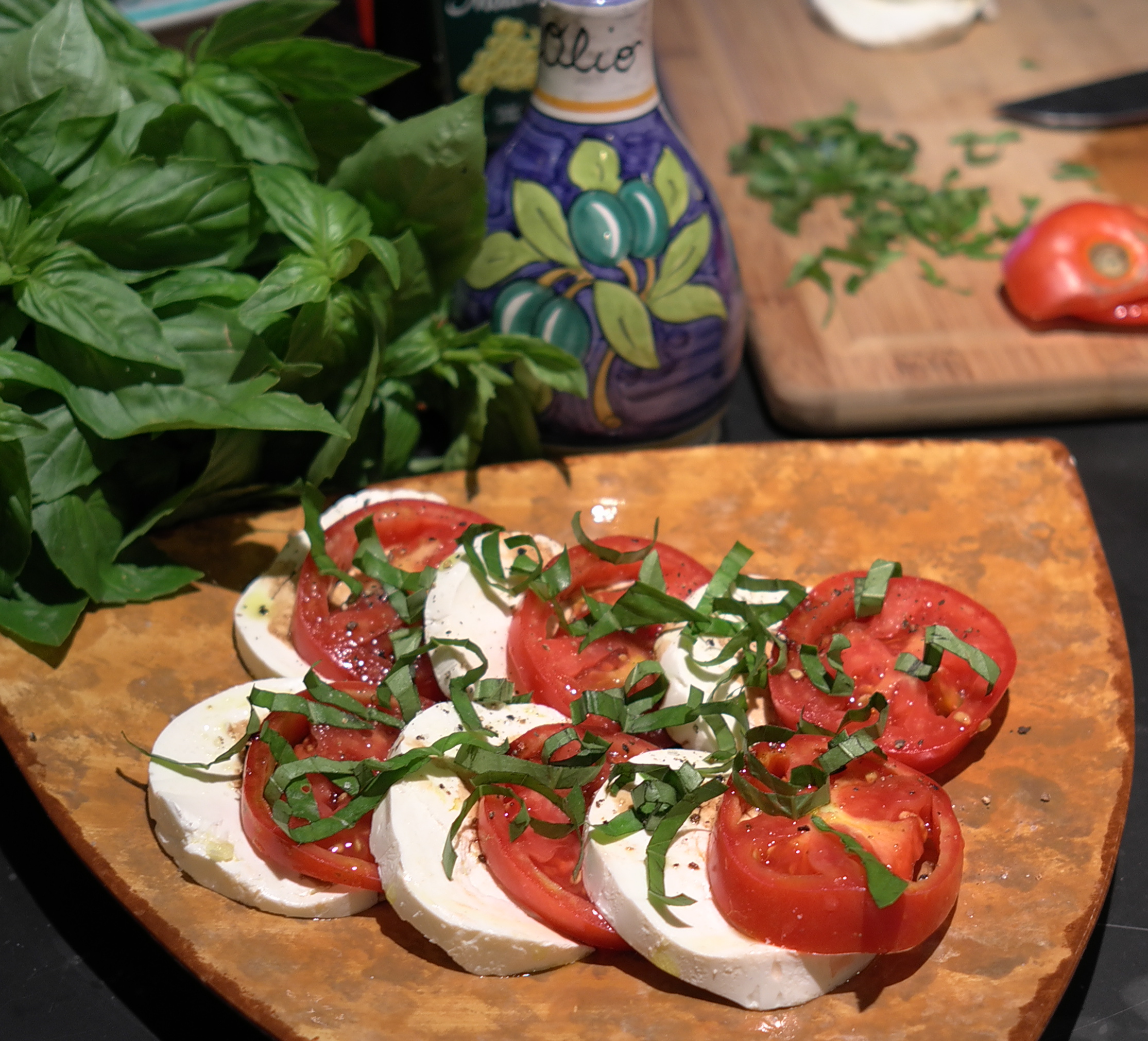
This basic dish is a great way to take advantage of the different varieties of tomatoes available in the Northeast at the end of the summer. While this salad may not win creativity points, it is worth posting because it is a classic combination and requires no cooking. I like to julienne the basil (so quick—see below) to spread the herb’s flavor out more evenly. The leftovers can be put into a sandwich for lunch the next day, or even used to make a fancy grilled cheese.
Note: If you use really fresh and delicious heirloom tomatoes, vegans can enjoy this salad without the cheese: just add a bit more salt to the tomatoes.
Ingredients:
- 1 pound fresh, salted mozzarella cheese, cut into 1/4 inch slices. If you can find buffalo mozzarella, that would be best.
- 2-3 tomatoes, cut into 1/4 inch slices
- olive oil for drizzling
- balsamic vinegar for drizzling
- salt and freshly ground black pepper
- 15-20 basil leaves
Directions:
- Layer the mozzarella and tomato in alternating slices on a large serving plate.
- Drizzle with olive oil and balsamic vinegar.
- Sprinkle with salt and pepper.
- Julienne the basil: Stack 5-10 basil leaves in a pile, facing the same direction. Roll the basil leaves up into a tight roll. Then, slice the basil into thin strips. Repeat with remaining basil leaves.
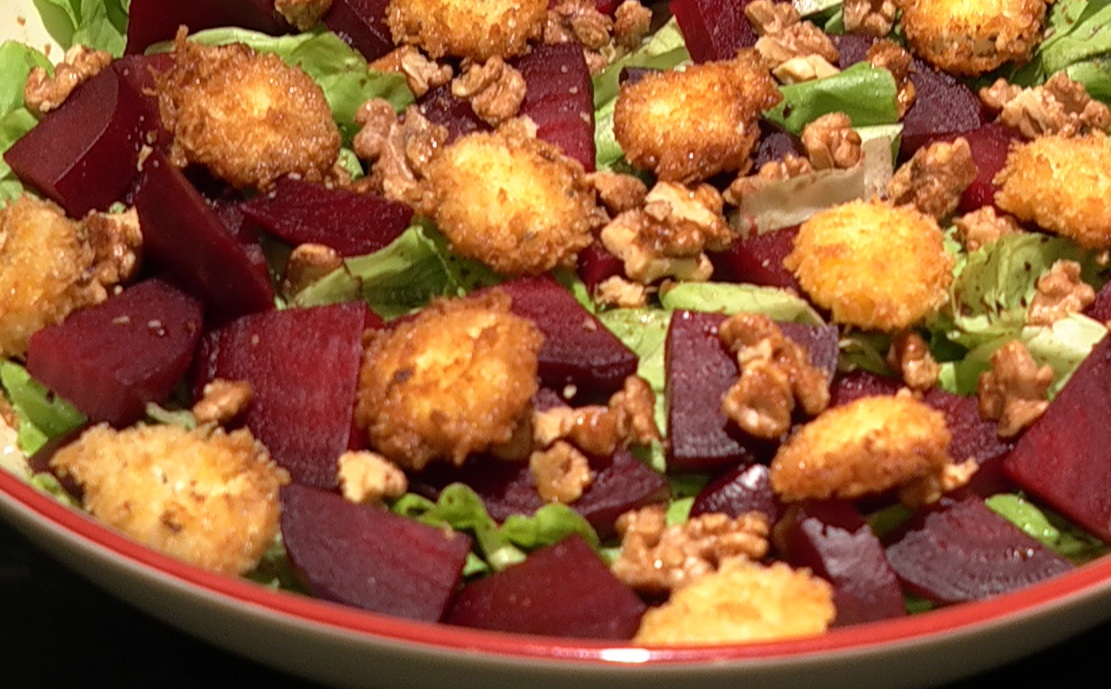
This is a beautiful special occasion salad, and our special occasion was that it was Wednesday. I think there is a certain irony to a salad that includes “fried” and “candied” in the title, and I couldn’t resist it. I used beets and Boston lettuce from this week’s CSA share. Thanks to sophistimom for the great recipe, which I adapted a only a little bit.
Ingredients:
For the beets:
- 2 beets, scrubbed
- 1 tablespoon olive oil
- salt and pepper
For the candied walnuts:
- 1 cup walnuts
- 1 tablespoon maple syrup
For the fried goat cheese:
- 4 ounces goat cheese
- zest of 1/2 lemon
- 1 1/2 tablespoons parmesan cheese
- 1/2 teaspoon dried thyme
- salt and pepper to taste
- 1 egg, beaten
- 1/4 cup Panko bread crumbs
- Oil for frying
Greens and Dressing:
- 1 head Boston Bibb lettuce (0r any other greens)
- 2 tablespoons balsamic vinegar
- 2 tablespoons extra virgin olive oil
Directions:
Prepare the beets:
- Preheat oven to 350 degrees. Place a sheet of aluminum foil on a baking sheet. Top with a piece of parchment paper. Place beets on parchment paper, drizzle with about a tablespoon of olive oil and sprinkle with salt and pepper. Wrap paper and aluminum foil around the beets and bake for 60-90 minutes, or until beets are tender. Let cool completely. Then, cut into 1/4 inch slices and divide each slice into fourths. Meanwhile, lower the oven to 325 and get going with the walnuts:
Prepare the Candied Walnuts:
- Mix together the walnuts and maple syrup until evenly coated. Place a sheet of parchment paper on a cookie sheet. Make a single layer with the walnuts, and heat for 20-25 minutes, flipping once during cooking.
- Allow to cool, and then roughly chop the walnuts.
Prepare the Fried Goat Cheese: (NOTE: You will want the cheese to be warm, so you can compile the whole salad, and save the second step below for last.)
- Mix cheese with lemon zest, parmesan, thyme, and salt and pepper until well blended. Roll cheese mixture into quarter-sized patties. Freeze for about 20 minutes. Roll in egg, and coat with Panko.
- Heat oil in a medium, heavy bottomed saucepan on medium heat. When you put the cheese in the saucepan it should start bubbling immediately. Flip them after 10-15 seconds, and cook on the other side for 10-15 seconds. The cheese should be golden brown.
Prepare the greens and vinaigrette:
- Whisk together vinegar, olive oil, salt and pepper. Toss with the greens.
Compile the Salad:
- Layer the greens and vinaigrette, followed by the beets, walnuts and then goat cheese. Enjoy!

Here is another take on lemon dressing (remember the first one?). This one is Alice Waters’ version, and is great served on something as simple as romaine leaves alone. It involves heavy cream, but don’t be scared–just a small amount goes a long way.
One of my favorite stops at the farmer’s market is Milk Thistle . They have different types of milk, yogurt, and cream, all served in glass bottles that you return to them. Also, once I tasted the freshness of their products, I realized what milk is supposed to taste like. Now I understand that milk is much more than just an excuse to get a milk moustache.
Since this recipe requires just a touch of heavy cream, what can one do with the rest of the bottle? Perhaps add a bit to a tomato sauce for pasta, or to pureed carrot ginger soup (recipe to come in fall…) Also, you can quickly and easily make fresh butter or sweet whipped cream. Here’s how:
1. Butter: Pour room temperature cream into a jar with a secure lid, at least double the size of the cream. Start shaking. Keep shaking. With Milk Thistle cream, you only need to shake for 5-10 minutes. (I have tried this with store-bought mass-market cream and it takes longer. I have also tried this with 26 5th graders from NYC and they think it is the absolute best thing ever.) Then, the cream will turn into a ball. Shake a few more times. Then, strain out the liquid. That liquid is buttermilk, which you can reserve for pancakes, dressing, etc. Now, get back to shaking. Strain out more liquid. Add a few tablespoons of water and shake some more, then strain (once you add water you will not save that liquid anymore). Add water, shake and strain 2-3 more times until liquid runs clear. Optionally, add salt. Enjoy immediately or refrigerate.
2. Whipped Cream: Pour cream into a large bowl, and start whisking. Keep whisking until it starts to get very thick. (Apparently, peaks will start to form but since I don’t bake I just know to stop when it starts to get thicker and a bit harder to whisk.) Then, add a a little bit of vanilla and some sugar depending on how sweet you like it, and whisk a little bit more. DO NOT overwhisk or it will basically turn into butter. This whipped cream is delicious of fresh berries or any other fruit.
And now, the Creamy Lemon Dressing Recipe!!
Ingredients:
- 1 tablespoon white wine vinegar
- grated zest of 1 lemon
- 1 tablespoon fresh lemon juice
- salt and freshly ground black pepper
- 3 tablespoons extra virgin olive oil
- 2 tablespoons heavy cream
Directions:
- Stir together vinegar, lemon zest, lemon juice, salt and pepper. Taste and adjust as necessary.
- Whisk in olive oil and heavy cream. Taste and adjust as necessary.
- Toss with greens. Optionally, top with chopped herbs you have on hand, such as basil, chervil, chives, and tarragon.

I like to pack my lunch for work, but get tired of sandwiches. As an easy alternative, I will sometimes make a hearty salad to have a few bites of as part of dinner, and then take some to go for lunch the next day. Thanks to Food and Wine magazine’s August 2011 issue for this recipe. You can substitute pretty much any large grain for the Israeli couscous (such as freekah or coarse bulgur). Do you have any other creative lunch ideas? Post them below or send me a message!
Ingredients:
- 6 cups packed arugula (6 ounces)
- 2 cups Israeli couscous (12 ounces)
- 1/2 cup extra-virgin olive oil
- 1/4 cup pine nuts
- 4 garlic cloves, chopped
- 1/4 cup freshly grated Parmigiano-Reggiano cheese
- salt and freshly ground black pepper
- 1 1/2 pints small tomatoes (cherry or grape), halved
- 4 yellow or orange tomatoes, cut into 1-inch dice
Directions:
- Bring a large saucepan of salted water to a boil. Add the 6 cups of arugula and blanch for 10 seconds. Using a slotted spoon, transfer the arugula to a colander. Rinse under cold water to stop the cooking, then drain thoroughly.
- Add the Israeli couscous to the boiling water and cook over moderately high heat, stirring occasionally, until it is al dente, about 10 minutes. Drain the couscous and spread it out on a large baking sheet. Drizzle lightly with olive oil and toss to prevent it from clumping. Let the couscous cool to room temperature.
- In a small skillet, toast the pine nuts over moderate heat, tossing, until golden brown, about 2 minutes. Let cool.
- Squeeze the excess water from the blanched arugula and coarsely chop it. Transfer the arugula to a food processor. Add the pine nuts, garlic, cheese, and 1/2 cup olive oil and process until the pine nuts are finely chopped. Season the arugula pesto with salt and pepper.
- Transfer the couscous to a large serving bowl and stir in the arugula pesto. Gently fold in the tomatoes.
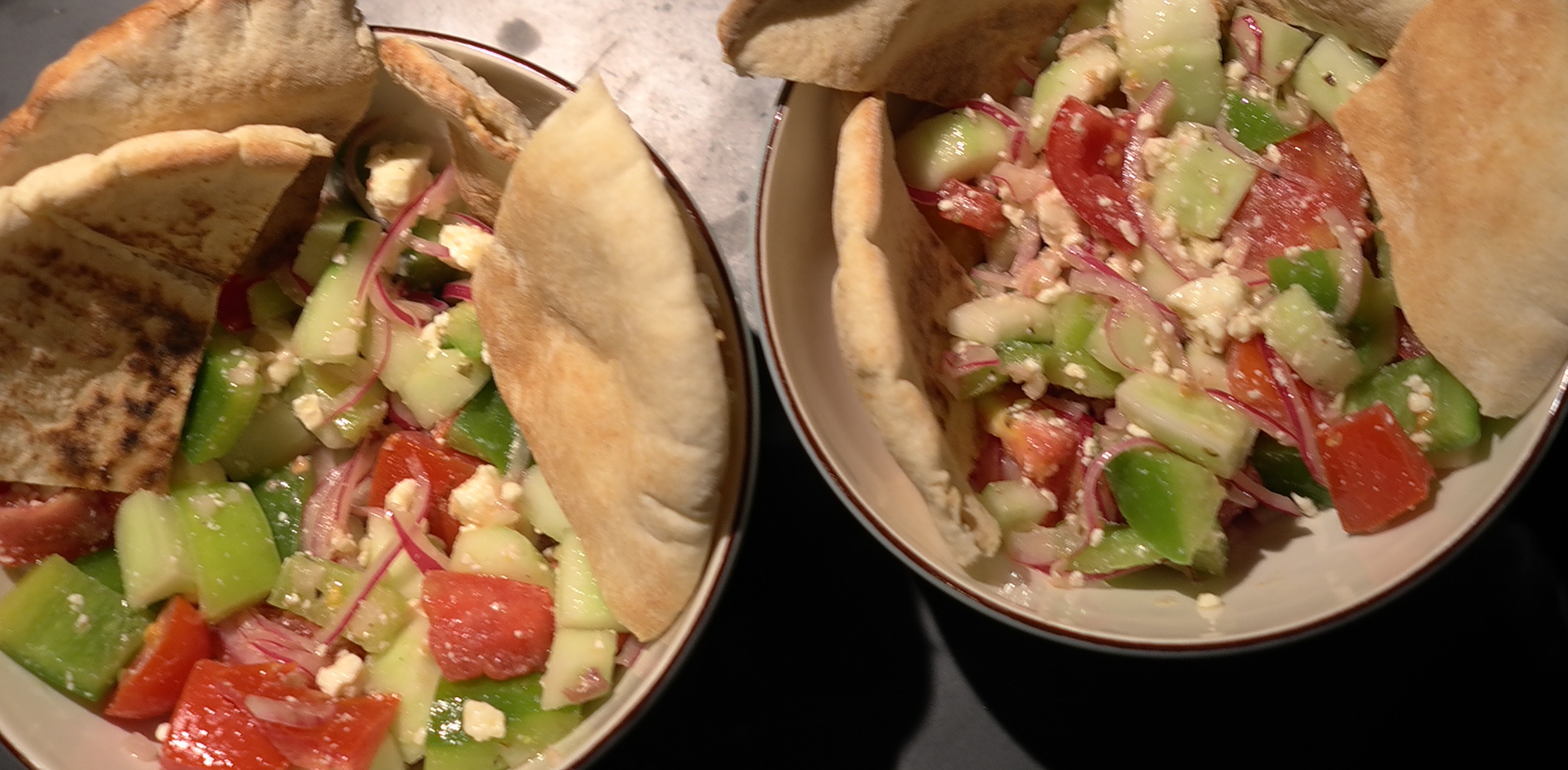 After a week of enjoying the local cuisine of the Pacific Northwest, I’m back! It was fun to see the similarities and differences between the produce available on the west coast compared to what’s been growing here on the east coast. We loved the restaurant Local 360, located in the Belltown neighborhood of Seattle. My husband and I shared a greek salad, and I was dreaming of making a similar one while on the red-eye back to NY. Lucky for me, my green-thumb-of-a-mom happened to have a surplus of all the key ingredients on hand from her garden and CSA. If you mix in the beans and serve it with toasted pita, this salad turns into a satisfying meal. For my original greek salad post, otherwise known as the salad that started it all (which is quite different from this one) click here!
Ingredients:
- 1 red onion, thinly sliced with a mandoline
- 3 cucumbers, peeled, seeded, and roughly chopped
- 2-3 pounds of a variety of tomatoes–core and seed the bigger ones, slice the little guys in half
- 2 green bell peppers, roughly chopped
- 1 15-ounce can small white beans (such as navy), strained and rinsed-optional
- 4 ounces feta, crumbled
- 1 shallot,finely diced
- 1 teaspoon garlic, minced
- 1 teaspoon dried oregano
- 3 tablespoons red wine vinegar
- 1/2 cup extra virgin olive oil
- salt and pepper to taste
Directions:
1. Prepare the dressing by mixing together the vinegar, shallots, garlic and oregano. Whisk the oil until combined and add salt and pepper to taste. Mix the onions in with the dressing and allow to sit for 20-30 minutes.
2. Combine cucumbers, tomatoes, green pepper, and beans (if you are using them) in a large bowl.
3. Add onions and dressing mixture and combine. Adjust seasoning as necessary. If you are using beans, you probably want to add more salt.
4. Sprinkle with feta, and serve with toasted pita.
Some Highlights from Seattle’s Pike Place Market




 fresh from brooklyn