
I recently got back from a wonderful weekend of cooking at Peter Berley’s kitchen on the North Fork of Long Island. The theme of the weekend was cooking with local foods in the winter. This salad stood out to me because of its unusual combination of flavors that seemed to go perfectly together. I had a healthy serving of it with some homemade foccacia for lunch on Sunday at the workshop. I enjoyed it so much that I made it on my own again Sunday night for dinner with friends. Every last piece of parsley was eaten up. Prior to trying this salad, I was not a fan of the fennel. However, shaving fennel with a mandoline helps to keep the flavor mild and delicious. This salad is a light and fresh complement to any meal.
Thanks to Peter Berley for this recipe and many others throughout the weekend. Your creativity in the kitchen is very inspiring!
Ingredients:
- 1/4 cup shaved or very thinly sliced red onion
- 1/4 cup lemon juice
- 1/2 teaspoon salt
- 1 very large or 2 medium fennel bulbs, shaved or very thinly sliced
- 1 cup loosely packed cup fresh flat-leaf parsley leaves
- 1/4 cup coarsely chopped celery leaves
- 2 tablespoons extra virgin olive oil
- freshly ground black pepper
- 24 pitted green, brine-cured olives, such as Picholine, sliced
- shaved parmesan to sprinkle on top (optional)
Directions:
- Toss the onion with 1/4 cup lemon juice and 1/4 teaspoon salt. Cover and refrigerate for about 30 minutes.
- In a large bowl, toss the fennel, parsley, olives, and celery leaves with the olive oil and the onion and its liquid. Season with 1/4 teaspoon salt and pepper to taste.Taste and adjust seasoning, adding more olive oil or lemon if needed.
- Sprinkle with parmesan (optional) and serve.

This simple salad was inspired by dinners at Frankie’s 457, including two of their salads: One has arugula and pecorino, and the other has a cipollini onion vinaigrette. My version uses balsamic vinegar and vegetables that can be found at the winter farmer’s markets including arugula, shallots, radishes, and carrots. Although I don’t crave fresh, crisp greens quite as much during the chilly winter months, this pretty salad balances out a heavy meal. You can definitely substitute your favorite greens in place of arugula.
Ingredients:
4 cups arugula
1/4 cup thinly sliced Pecorino Romano
2 carrots, shaved (just continue to peel the carrot in long strips)
3 radishes, cut into matchsticks
1 shallot
1/4 cup balsamic vinegar
1 teaspoon sugar
1/2 teaspoon salt
1/2 teaspoon pepper
1/3 cup extra virgin olive oil
Directions:
1. To make the dressing, peel and roughly chop the shallot. Pulse the shallot in a food processor until finely chopped. Add the vinegar, sugar, salt, and pepper, and pulse again. Add the olive oil and blend until smooth.
2. Layer the arugula, carrots, radishes, and romano on 4 plates. Drizzle with the dressing and serve.

This is a special edition “request” post (thanks, A.H.) for a dish I made for a dinner party last week. I wasn’t planning on posting it, so there is no photo. If anyone makes this–can you please take a picture and forward it to me?
It comes from Jack Bishop’s A Year in a Vegetarian Kitchen. It’s vegan and delicious.
Ingredients:
- 2 tablespoons extra virgin olive oil
- 2 medium onions, halved and thinly sliced
- 1 tablespoon minced gingerroot
- 2 medium garlic cloves, minced
- 1 teaspoon ground cumin
- 1 teaspoon ground cinnamon
- 2 1/2 cups vegetable broth
- 1 15-ounce can chickpeas, rinsed and drained
- 1 medium sweet potato, peeled and cut into 1/2 inch dice (I actually used almost 2 sweet potatoes)
- 6 pitted prunes, chopped
- 2 tablespoons minced fresh cilantro leaves (I minced these and then forgot to add them, so I guess feel free to leave them out)
- salt and freshly ground black pepper
Directions:
1. Heat the oil in a large sauté pan or Dutch oven over medium heat until shimmering. Add the onions and cook until golden, about 5 minutes. Add the ginger and garlic and cook until fragrant, about 1 minute. Stir in the cumin and cinnamon and cook until the spices smell toasty, about 30 seconds.
2. Add the broth, chickpeas, sweet potato, and prunes and bring to a boil. Reduce the heat, cover, and simmer, stirring once or twice, until the sweet potatoes are tender, 12-15 minutes. Stir in the cilantro (!) and salt and pepper to taste and serve.
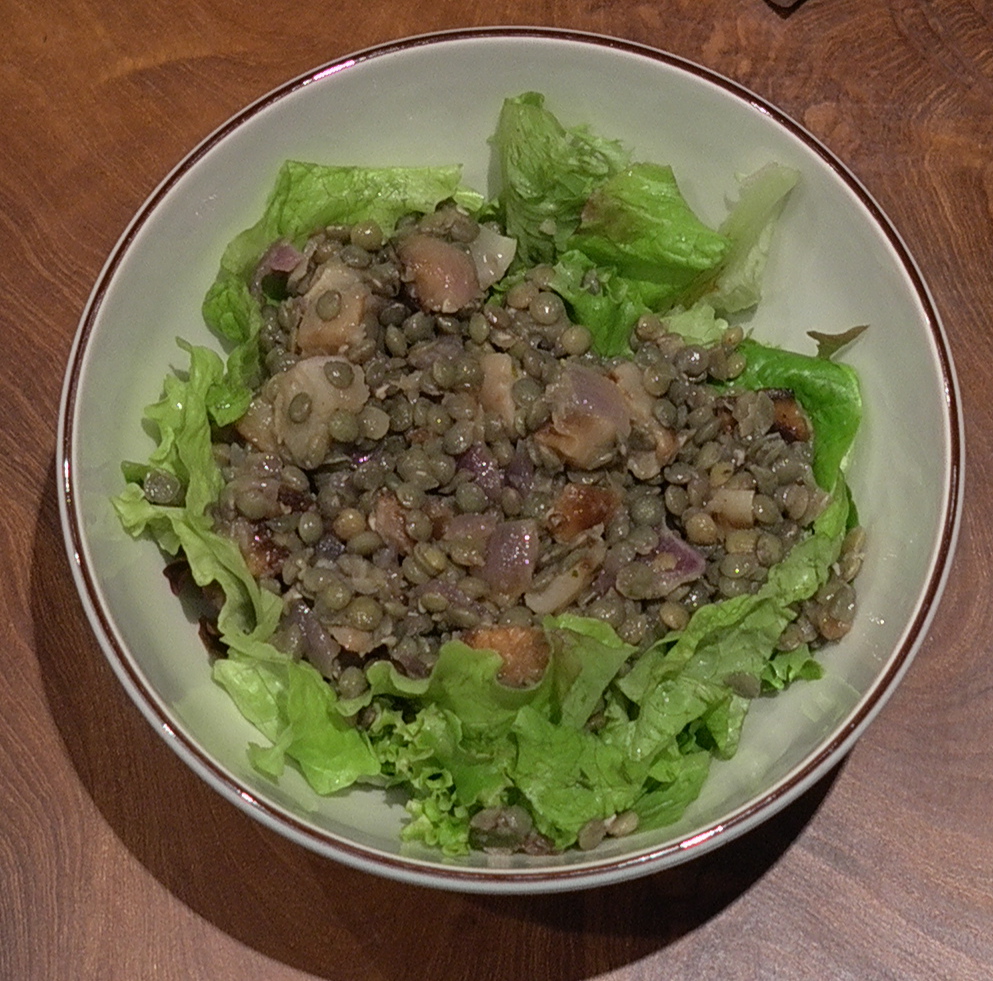
On Veteran’s Day, I had the day off and enjoyed lunch with a friend at Freeman’s (mmm). We both got their lentil salad, and it was so delicious that we each decided that we must make lentil salad ourselves as soon as possible.
Jack Bishop’s A Year in A Vegetarian Kitchen is filled with healthy recipes that highlight seasonal food. This recipe was great because I was able to make it a few hours ahead of time, and then just put it all together at the end. It was delicious for lunch the next day as well. Are you scared of cooking lentils? You are not alone. I am not a very experienced lentil cooker, and they usually end up mushy and bland. This recipe turned me into a believer. I will put the exact recipe below, but I actually cooked my lentils at least 5 minutes less than he suggests (mostly because I was in a hurry.) The lentils were just the right consistency.
Ingredients:
1 pound turnips, scrubbed and cut into 3/4-inch dice
3 small red onions (about 1/2 pound), quartered through the root ends
1/4 cup plus 1 tablespoon extra-virgin olive oil
salt and freshly ground black pepper
1 1/4 cup dried green lentils (called French lentils in some places), rinsed and picked over to remove any stones
2 garlic cloves, peeled and lightly crushed
2 bay leaves
2 tablespoons fresh lemon juice
1 teaspoon dijon mustard
1 teaspoon minced fresh tarragon leaves
6 cups packed mesclun, baby spinach, or other tender greens (I used a combination of young greens from Carroll Street’s Sunday market)
Directions:
- Move an oven rack to the middle position and heat the oven to 425 degrees. Toss the turnips, onions, 1 tablespoon of the oil, and salt and pepper to taste on a large rimmed baking sheet. Roast, stirring the vegetables once or twice, until lightly browned, about 40 minutes. Cool slightly and finely chop the onions.
- Meanwhile, bring the lentils, garlic, bay leaves, and 6 cups of water to a boil in a medium saucepan. Reduce the heat and simmer for 20 minutes. Stir in one teaspoon salt and continue cooking until the lentils are tender but not mushy, about 5 minutes. Drain and discard the garlic and bay leaves.
- While the lentils are cooking, whisk the lemon juice, mustard, and salt and pepper to taste in a large bowl. Whisk in the remaining olive oil until the dressing in smooth. Whisk in the tarragon and adjust the seasonings, adding more salt and pepper as needed.
- Add the warm lentils, chopped onion, and roasted turnips to the bowl with the dressing. Toss to coat and adjust the seasonings, adding salt and pepper to taste. Cool to room temperature, stirring the lentil salad from time to time to promote even absorption of the dressing.
- Divide the greens among four large plates. Spoon the lentil salad over the greens and serve.

My turkey salad picture: Proving produce is more photogenic than poultry 😦
My mom is responsible for creating wonderful Thanksgiving traditions that go beyond the traditional. There is always plenty to eat for vegetarians–not just a heap of potatoes and a roll. She is a vegetarian and an incredible cook, and makes a meal that herbvivores and carnivores enjoy side by side (salami, stuffed mushrooms, meatballs, spinach pie, sweet potato casserole to name a few favorites). This year was no different–the family getting together and enjoying delicious food made it my favorite day of the year. Thanks, mom!
Perhaps our family’s most unusual Thanksgiving ritual is the annual voting of the food. At the end of the meal, each dish is voted and commented on anonymously. My dad then reads all the comments while someone else tallies up the votes. Since many people in my family pride themselves in their terrific senses of humor (who is the funniest?), the comments are hilarious. The least favorite dish is not invited back on the menu the following year. Several years back, I remember the turkey getting the lowest vote, but an exception was made for the bird. I did not understand why an exception was made, since I enjoyed vegetarian Thanksgiving year after year and did not miss the turkey one bit.
Now that I am back to eating meat after an almost 20-year hiatus, I was curious about this turkey business, and eager to contribute a second turkey for the holiday meal. I picked it up from Stinky Brooklynon Smith Street. The turkey came from Stonewood Farms in Vermont. It was antibiotic and hormone-free, and pasture-raised with uncrowded open sided barns. Turkeys from true family farms such as this one are a far cry from what is produced and being called ‘turkey’ on the mass-market.
Jonathan Safran Foer’s Eating Animals is not my favorite book because reading it sort of feels like being lectured to by my 13 -year old self. However, I’m glad he wrote it because we are so far removed from our food that it is impossible for people to imagine what really goes on behind factory farm doors. He explains in detail some of the problems:
“Jamming deformed, drugged, overstressed birds in a filthy, waste-coated room is not very healthy. Beyond deformities, eye damage, blindness, bacterial infections of bones, slipped vertebrae, paralysis, internal bleeding, anemia, slipped tendons, twisted lower legs and necks, respiratory diseases, and weakened immune systems are frequent and long-standing problems on factory farms.”
Clearly, this treatment causes a great deal of suffering for the animals involved. But even if someone couldn’t care less about the life of a turkey, do we really want to be eating animals that are this unhealthy? Their natural life-cycle is so disrupted that they don’t even taste the same. Foer goes onto explain that factory farmed birds are then “injected (or otherwise pumped up) with “broths” and salty solutions to give them what we have come to think of as the…look, smell, and taste.”
Although I still don’t think turkey is a necessity on Thanksgiving Day, I enjoyed preparing the turkey with my husband this year. I looked up a recipe (Alton Brown’s Good Eats Roast Turkey), he did most of the hard work, and I watched in awe.
Now, of course, there are tons of leftovers. This morning I made a turkey soup and this quick recipe for curried turkey salad. Enjoy!
Ingredients:
2 cups of chopped roasted turkey
1 rib of celery, diced
2 tablespoons mayonaisse
1 teaspoon curry powder (I was out, so made my own version from mixing cumin, cardamom, turmeric, coriander, and mustard powders)
1/2 teaspoon salt
freshly ground black pepper
Directions:
1. Mix together mayonaisse with curry powder.
2. Fold in turkey and celery and combine. Add salt and pepper.
3. Serve over a bed of greens, or in a sandwich.
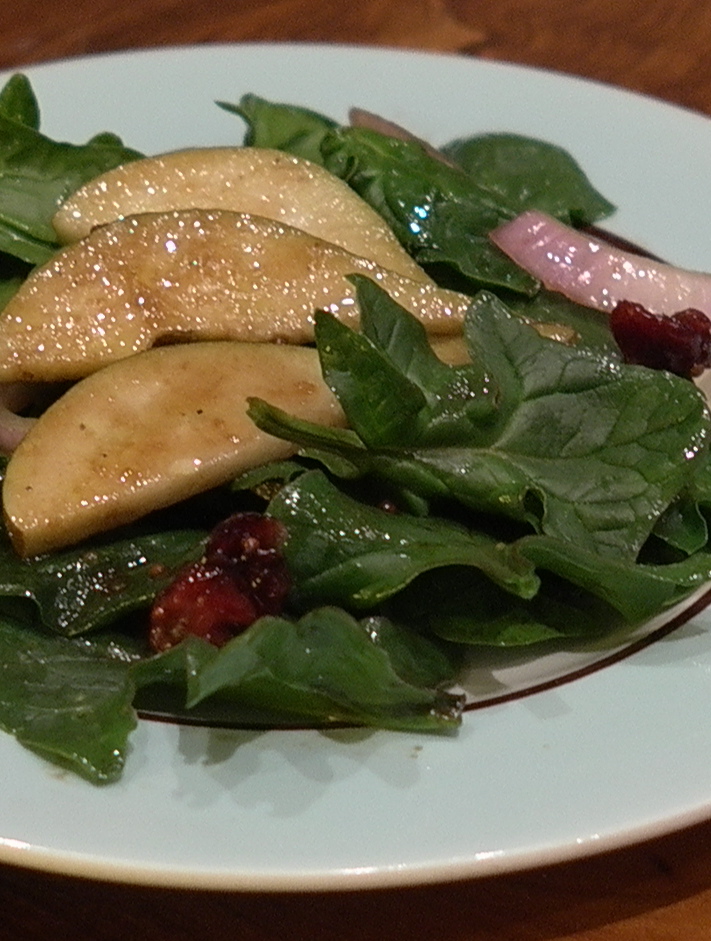
I guess I’m on a pear kick, so here’s another one. This is a variation of this Epicurious recipe. It has great fall flavors and can be made in very little time. It is easy to double the recipe so you can make a lot for a big group.
Ingredients:
Dressing
- 1/3 cup extra-virgin olive oil
- 2 tablespoons balsamic vinegar
- 2 teaspoons whole-grain mustard
- 1 teaspoon sugar
- 1 teaspoon kosher or sea salt
- Freshly ground pepper
Salad
- 1/2 cup thinly sliced red onion
- 1/3 cup dried cranberries
- 8 cups lightly packed fresh baby spinach leaves, stemmed if needed
- 2 firm but ripe Bosc pears (do not peel), quartered lengthwise, cored, and cut into long, thin slices
Directions:
- To make the dressing, in a small jar with a tight-fitting lid, combine the olive oil, vinegar, mustard, sugar, salt, and pepper to taste. Cover tightly and shake vigorously to blend. Taste and adjust the seasoning. Set aside.
- Place the onions in a medium bowl and cover with cold water. Let stand for 30 minutes. This crisps the onion and takes away the raw onion taste. Drain well and pat dry on paper towels.
- In a small bowl, toss the cranberries with 2 tablespoons of the dressing to soften them. Set aside for at least 20 minutes or until ready to serve the salad.
- To assemble the salad, place the spinach, onions, and pears in a large bowl. Give the remaining dressing a last-minute shake and pour over the salad. Toss to coat evenly. Arrange the salad in a large serving bowl or divide it evenly among 8 salad plates. Scatter the cranberries over the top(s). Serve immediately.

This beautiful Barefoot Contessa recipe is perfect for the holidays. If you are hosting vegetarians, this can serve as a satisfying main course as well. I put her exact recipe below, but I actually made a few slight changes. I used about 1/4 cup olive oil instead of 1/2 cup. Also, I forgot to put the cranberries in the oven, so I just added them raw. To toast the walnuts, I put them in a 350 degree oven for 8-10 minutes, tossing occasionally.
Peeling a dicing a raw butternut squash is not on my list of favorite activities. However, super sharp knives help to do the trick. We recently got our knives sharpened by the good people at A Cook’s Companion. It was long overdue, and I am so glad we did it. It made the dicing process a whole lot easier.
Ingredients
- 1 (1 1/2-pound) butternut squash, peeled and 3/4-inch diced
- Good olive oil
- 1 tablespoon pure maple syrup
- Kosher salt and freshly ground black pepper
- 3 tablespoons dried cranberries
- 3/4 cup apple cider or apple juice
- 2 tablespoons cider vinegar
- 2 tablespoons minced shallots
- 2 teaspoons Dijon mustard
- 4 ounces baby arugula, washed and spun dry
- 1/2 cup walnuts halves, toasted
- 3/4 cup freshly grated Parmesan
Directions
- Preheat the oven to 400 degrees F.
- Place the butternut squash on a sheet pan. Add 2 tablespoons olive oil, the maple syrup, 1 teaspoon salt and 1/2 teaspoon pepper and toss. Roast the squash for 15 to 20 minutes, turning once, until tender. Add the cranberries to the pan for the last 5 minutes.
- While the squash is roasting, combine the apple cider, vinegar, and shallots in a small saucepan and bring to a boil over medium-high heat. Cook for 6 to 8 minutes, until the cider is reduced to about 1/4 cup. Off the heat, whisk in the mustard, 1/2 cup olive oil, 1 teaspoon salt, and 1/2 teaspoon of pepper.
- Place the arugula in a large salad bowl and add the roasted squash mixture, the walnuts, and the grated Parmesan. Spoon just enough vinaigrette over the salad to moisten and toss well. Sprinkle with salt and pepper and serve immediately.

 fresh from brooklyn